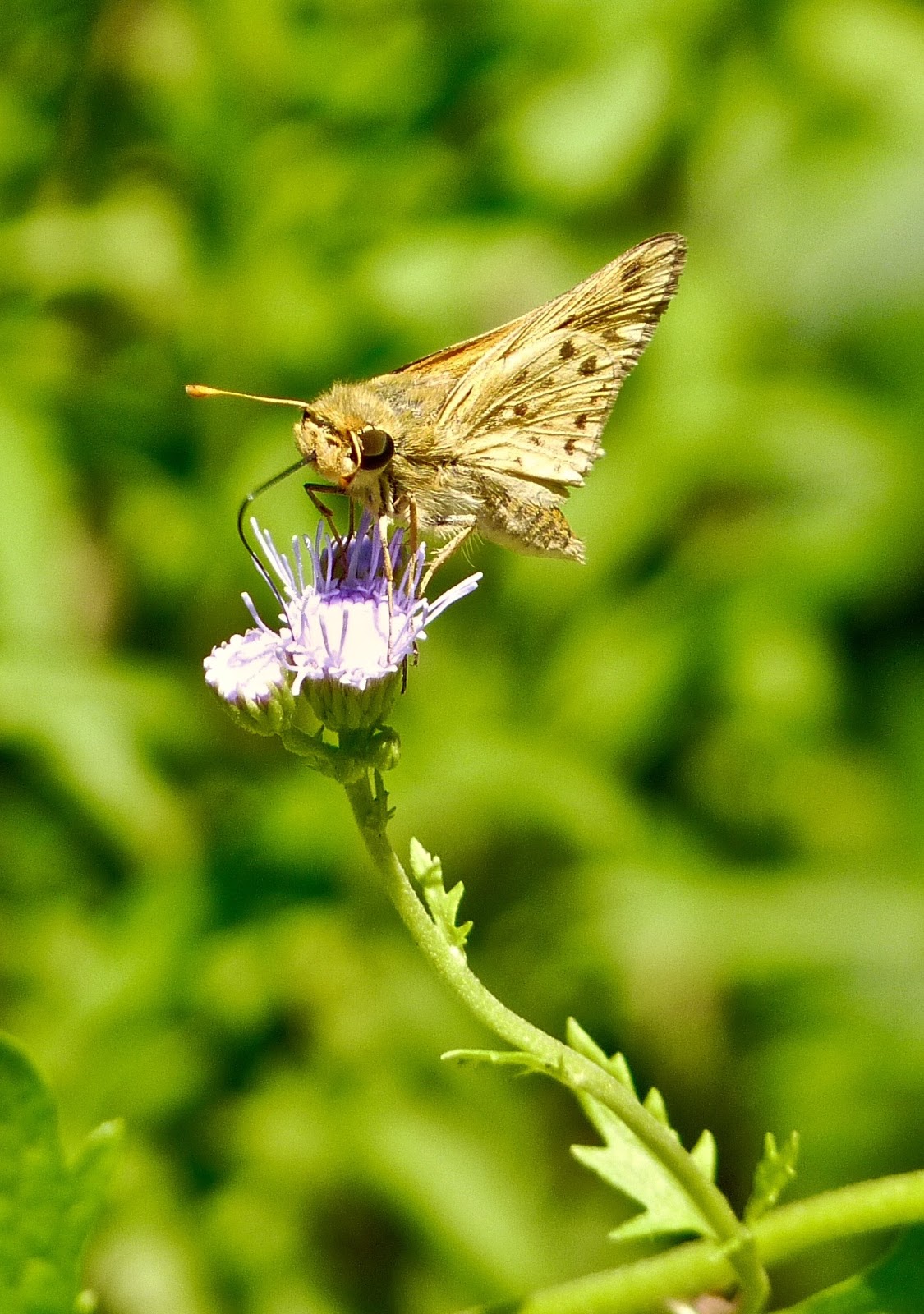
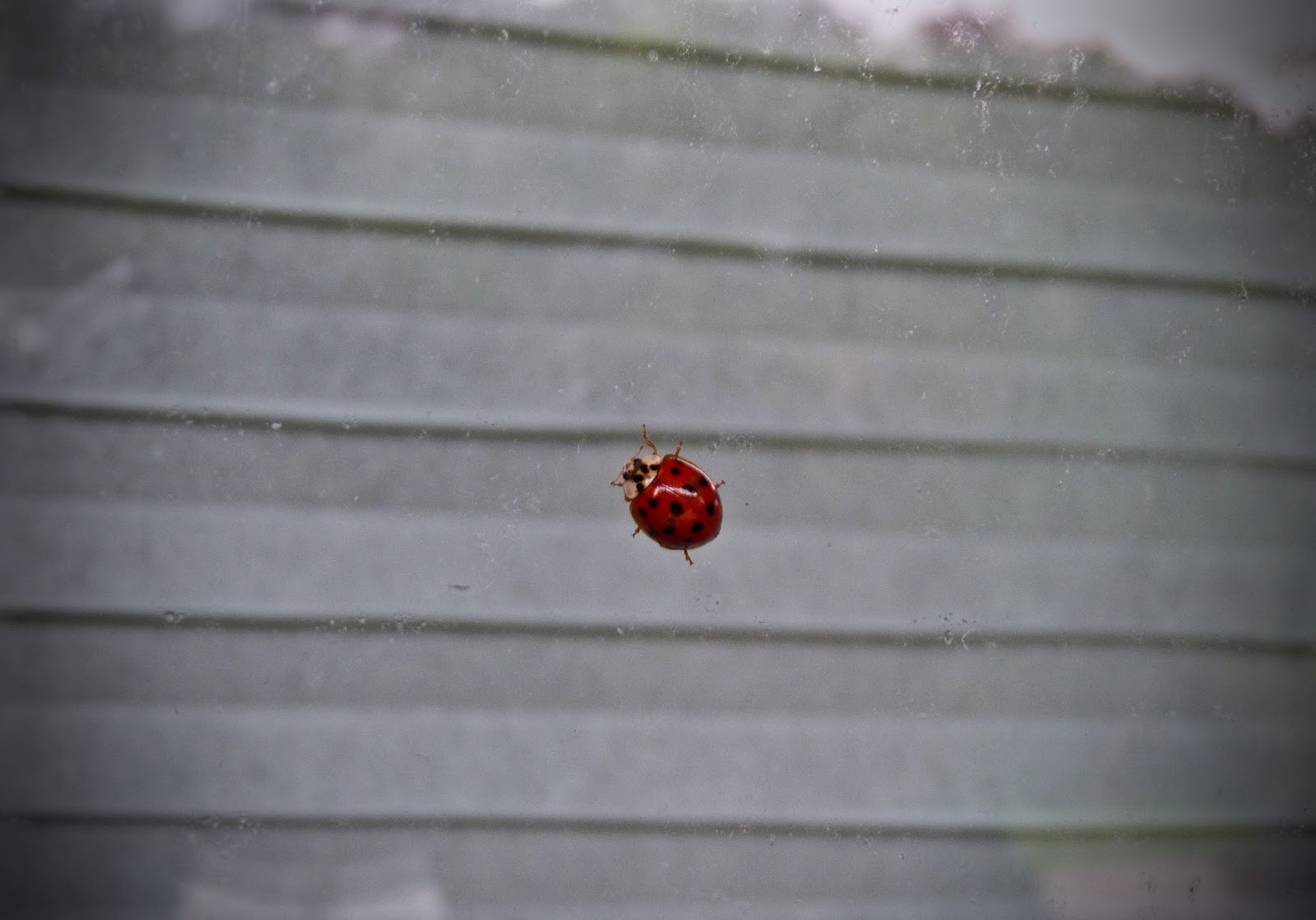
I was under the distinctly mistaken impression that the heat of August meant the numbers and types of wildlife visiting our outdoor spaces last month would be sparse. When I went back to gather up images however, I realized I had vastly underestimated on all counts.
Despite the heat, lack of rain, and relatively wilted plants on offer, the activity here in August went on unchecked, no matter if humans felt comfortable outside or not. Common things being common, many of our visitors last month are part of a core group, what we think of as our "usual suspects". So to keep the number of images manageable this month, I decided to skip over photos of Cardinals, Mockingbirds, Blue Jays, Titmice and Squirrels. Similarly shots of anoles, honeybees, carpenter bees, Gulf Fritillary and Question Mark butterflies have all been set aside, they will all wait for another post.
In their stead I'd like to offer up a few of our less frequently observed visitors, which as you may suspect, means there are a few identification questions left open. Wide open. Gaping, even.
I've done my best to at least narrow the possibilities, and will ask not only your indulgence, but your participation. If you spot anything I've either mislabeled or that you can identify with certainty, I hope you'll speak right up in the comments section. With that invitation on the table, let's begin, shall we?
Boy howdy, do we ever have ants in our plants. Ants of every type and description, including these itty bitties that are marching up and down the tropical salvia plants all summer long. Why? Have you never heard the song? They all go marching...down...to the ground...to get out...of the rain. We haven't had a drop of rain for weeks and yet the marching, it never ceases.
Because. They are ants and that is what ants do! (Sidebar: If you are new here and it is strictly scientific information you are seeking, this is not your post or post-
er. I love science as much as the next gal, but there's more to wildlife than the science alone. There will be sciencey stuff later, I promise. Sit tight.).
Though we host honeybees and carpenter bees aplenty all summer long, these metallic green sweat bees are a rarity. Which is a shame, because they are some of our most striking visitors.
Red Paper Wasps, (Polistes carolina) are common visitors but not ones I commonly photograph. More aggressive than other paper wasps, they feed on caterpillar "meat" (that is the term
the site used...creepy, yes?) and nectar.
While initially tempted to label this as a tiny bee, a closer look reveals it to be a tiny wasp or fly, not a bee. How do I know? There are three giveaways. One is the single set of wings, bees have two. Also, the antennae do not seem to be jointed and bee's always are. To make it a hat trick the absence of pollen carriers on the hind legs says this is something else
passing as a bee. Such mimicry is called
Batesian, when something harmless benefits from presenting a similar appearance to something packing more offensive capability. (See? The science was coming, I just had to get warmed up.)
Do I know what this is posing on the mint? No I do not. But I know what it isn't. It isn't a bee.
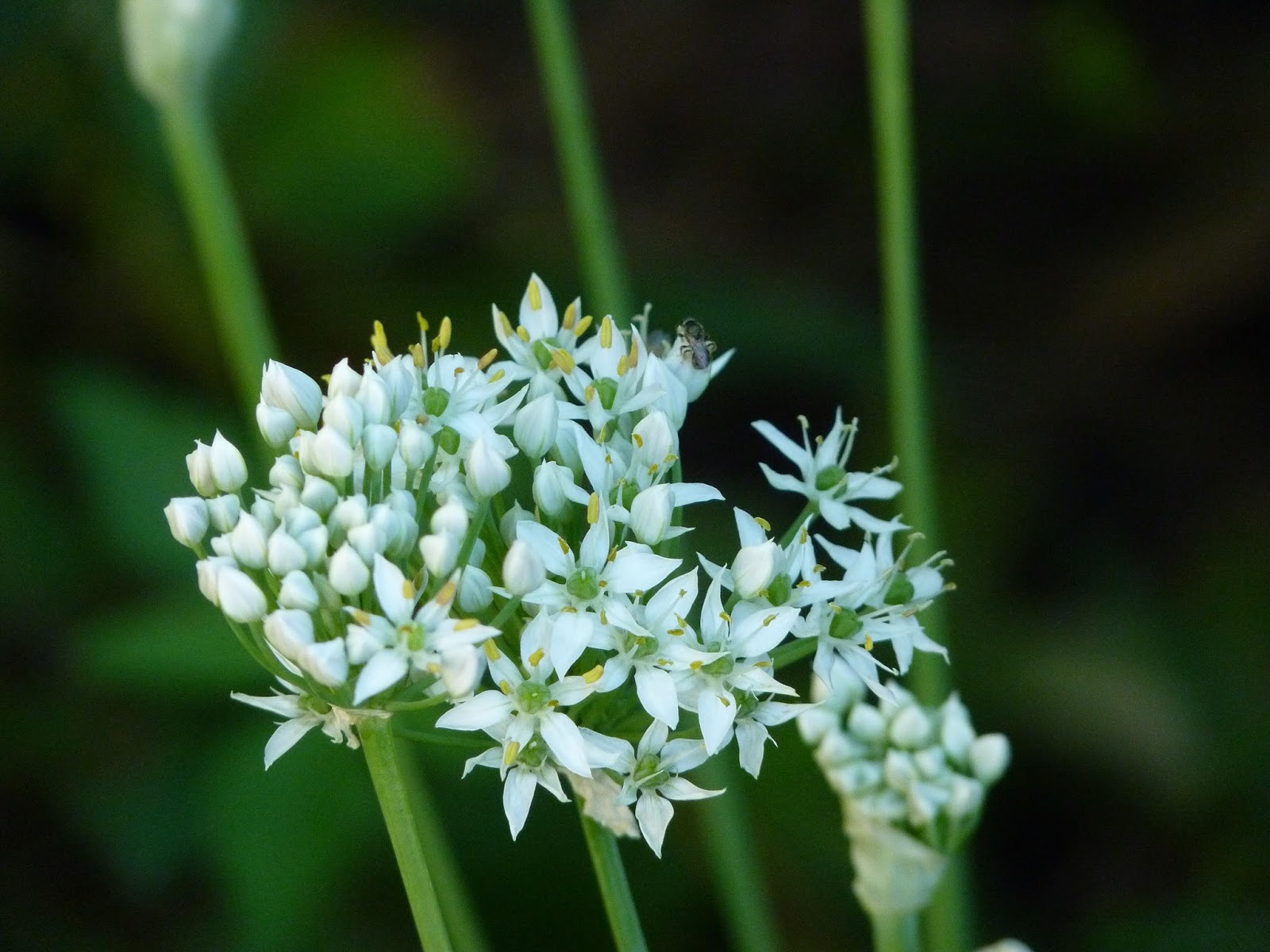
Small as the mimic above may be, the visitor to follow is even smaller. So small I can't get any sort of handle on identifying marks or characteristics.
In fact, in case you don't spot it immediately, I'll direct your attention to the upper middle outside edge of the flower cluster, just to the right of center. There, do you see? A teensy tiny something, and welcome whether or not I have any idea how to politely introduce him/her.
We don't have a pond or water feature per se, but we do have a swimming pool. Whether or not it is responsible for drawing in a variety of dragonflies I cannot say. I see as many of these deft aerialists out front in the high and dry as I do anywhere near the water. A few of them I recognize (or at least think I do).
I believe both of these green bodied beauties to be
Eastern Pondhawks. They both have what appear to be (ahem!) "claspers" at the tips of their tales, which leads me to think they are both males.
The images that follow are two examples of a not-so-flashy dragonfly, what I believe to be
Wandering Gliders, so named because they are found all around the globe.
Brown all around, these dragonflies are dressed for Fall.
To wrap up the dragonfly parade, here is a set of photos of a dragonfly I can identify with certainty, thanks to corroboration from the great folks at
BugGuide. The following are all images captured of a female Checkered Setwing (Dythemis fugax).
Typically when I'm attempting to photograph a dragonfly I get too close. The dragonfly will take wing, fly around a bit, and then resettle either exactly where it had previously been, or very close by. I've learned if I can move in and then remain still, I will often get a decent close shot.
On this particular afternoon, the breeze was gusting quite a bit. This dragonfly apparently decided it liked that agave spike enough that with the wind it was just too much trouble to attempt multiple landings. So it gambled I was low risk, and stuck tight as I circled, while the wind continually rearranged its wings.
So much for certainty. To follow is yet another mystery visitor, a larger one I felt fortunate to observe, much less photograph. When I first saw this beautiful bird, I thought, "A Ladderback Woodpecker!" and was filled with joy.
When I started looking closely at photographs and detailed information on birding websites, my joy remained unabated but my certainty over the proper identity of this bird waned. Maybe not a
Ladderback. Ladderbacks look similar, and are found in Texas, but they nest and forage in cactus.
Perhaps this is an adolescent
Golden Fronted Woodpecker? We are solidly within their year round range, and the call is one I've heard many times when working out in the garden. But did I hear that call that afternoon? I couldn't be sure.
I've tried photographing Golden Fronted woodpeckers before when they visited (and, joke's on me, think I probably mis-identified them as Ladderbacks). They were hard to photograph, working high up in the tree canopy and constantly on the move.
I spotted this bird perhaps fifteen feet up. It remained stationary for long periods, intently watching the ashe juniper trunk just above. Had the heat gotten to this bird, or had I gotten the identification wrong a second time? At one point I made too much noise and the bird looked right at me. Thinking it would immediately fly off I put down my camera. Nope. It moved up the trunk a bit but didn't go far. So probably not the shy Golden Front after all.
Back to the web sites. Could it be a
Red-Bellied Woodpecker? Though often described as a bird of the "East" United States, we are at the far south and west edge of their year 'round range, and listening to the call I am certain I've heard it many times over the past few years. Also compelling was the description of their foraging habit.
Red-Bellied woodpeckers spend more time searching and pecking at bark rather than drilling into it. While I've heard woodpeckers drilling into trees all summer long, I didn't see or hear any such behavior that afternoon. This case of identity remains unsolved.
As for me? It is time for me to emulate this sturdy fellow and exit, Stage Right.
_ _ _ _ _ _ _ _ _ _ _ _ _ _ _ _ _ _ _ _ _ _ _ _ _ _ _ _ _ _ _ _ _ _ _ _ _ _ _ _
That is it, the full roundup of not-so-commonly seen wild visitors to our spaces, here just west of Austin, Texas, looking back at August of 2015. My deepest gratitude as always to our hostess
Tina, of My Gardener Says.
I deeply admire her unflagging support of and advocacy for wildlife gardening. You should run not walk, to visit her website and read her own Wildlife Wednesday post recapping August, without fear of one iota of stridency or scold. Her post this month is especially whimsical, and expresses contagious delight for a garden well populated with wondrous creatures.
While you are visiting My Gardener Says, be certain to check the comments section of today's post for links to any number of Wildlife Wednesday reports from all around. And who knows - maybe when I check there I will find a link to your post, too. That would be grand.