By the time it is mid April in Texas, most questions surrounding Wildflowers:Will They or Won't They? have been answered for another year, and it is all over but the bluebonnet trampling, as folks scramble to take photos surrounded by all that heavenly blue.
Though the majority of my bluebonnets bloomed early, I have a few other native specimens that seem to be taking an opposite tack. These perennial procrastinators are still cruising along, content to remain on Bloom Watch status.
Case in point - Bauhinia, or
Anacacho orchids are in full bloom around town, including on the University of Texas campus where several gorgeous specimens are providing beauty over by the Art buildings. On the tree growing in our significantly more shaded setting however, the buds are just beginning to appear.
 |
| Orchid flowers on the way |
Same goes for what I believe to be a small stand of Roughleaf dogwood (
Cornus drummondii) also growing here in deep shade. Unlike photos of specimens growing in more sunny open areas, our dogwoods sport eensy white flowers I find nearly impossible to capture in a photograph. Even showing you the buds proved tricky as April breezes seem to somehow be attached to, or, triggered by the presence of my camera. Every time I pick the one up, the other picks up as well.
 |
| These dogwood multiply via suckers. We are slowly getting a small thicket of them. |
An onion that decided to sprout last summer morphed in a very few days from pantry staple to garden candidate. After planting, the stalk hung around aimlessly for months but the payoff is finally on the horizon. When it comes to alliums I like their flowers in the garden almost as much as I enjoy eating the parts I routinely slice or saute for dinner.
 |
| Compost bin or garden bed? Once onions sprout, they can swing either way. |
Speaking of eating, several culinary sages I planted a couple of years ago to use in the kitchen (
Salvia officinalis) sent up bloom stalks for the first time this year. I had no idea these plants flowered and clipped a few stems to try and prolong the plant's usefulness as an herb. Looking at the shape and color of the stem and blooms their kinship to other salvias is obvious.
 |
| I thought about sprinkling these on a salad but put them in my kitchen window instead. |
Blogger Debra from
Under the Pecan Leaves recently featured some wonderful shots of tiny white waxy flowers appearing on a more mature native persimmon tree she put in after beginning to grow persimmon seedlings. Her post reminded me I'd
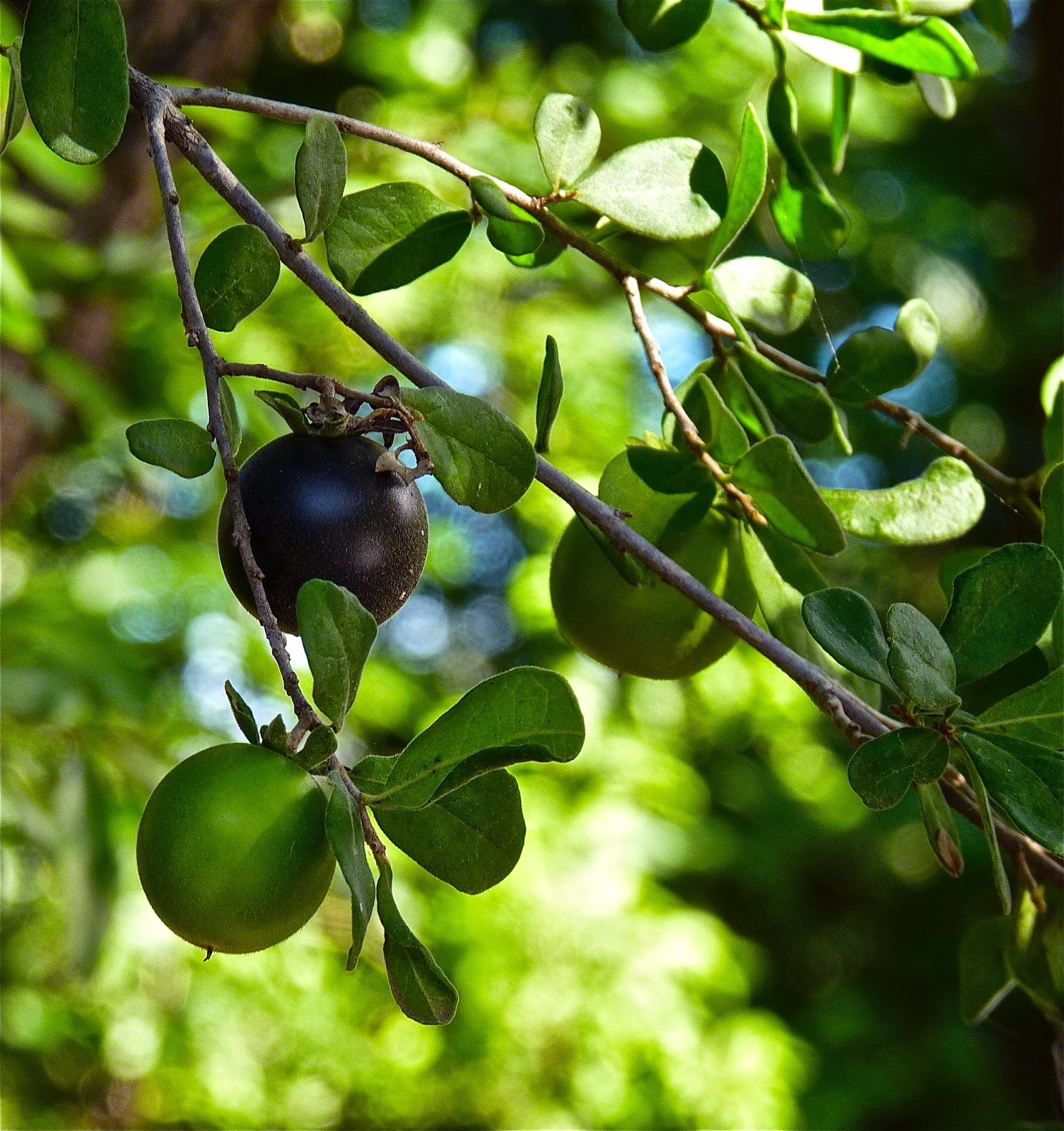
noticed a persimmon here for the first time last season (
Diospyros texana), surprised originally by the fruit and then by the attention lavished upon said fruit by a territorial mockingbird.
I checked for flowers now that I knew to look, and despite the lingering presence of maturing fruit on the tree, sure enough there they were. Blink-and-you'll-miss-them small, yet packed with promise.
Besides blossoms, tiny galls indicate some symbiotic insect or organism has been busy working nearby. It makes for some alarmingly tortuous looking leaves, but is nothing that will harm the tree long term.
I've heard galls compared to bug bites on humans. Irritating but rarely significant. By the time you notice the bite, the culprit is long gone. I'm choosing to interpret this activity as a positive reminder that growing native flora supports the life cycles of multiple interdependent fauna.
Native plant whisperer and garden blogger
Tina, from My Gardener Says, generously shared several
salvia lyrata plants after I went all fan girl crush on hers last year. I'd been concerned to show their progress here previously, unsure I'd planted them in spots where they would flourish, but several bloom stalks later and I'm happy to be enjoying these blossoms in person at last.
With their deeply colored veining, I'm seeing lyreleaf sage as a great native substitute for what is an old Austin landscaping and garden standby, Ajuga.
The sage grows a bit taller, and with only a handful in play currently I'm not pulling out my ajuga plants just yet. I do hold high hopes for the salvia lyrata to seed out and produce a dense stand of sage to eventually be used in ajuga's stead. Or maybe in combination? I have a very hard time pulling out happy plants, even when they aren't native.
Finally, while you may be weary beyond measure of the constant stream of anole photos featured here, I should warn you I am only getting started. I don't think I ever spotted an anole I didn't try to photograph. They pose so adorably - resistance is futile.
Happy Trails!