But oh, I so do not. I am covetous of what I see on other folk's blogs all the time. I fall prey to envy on every level, from the macro to the micro. I want this flora, if I only had that fauna! A portion of my angst revolves around timing, as I wonder why my own fill-in-the-name-of-your-recently-posted-blossom, hasn't bloomed here yet.
Most recently I came down with a serious case of caterpillar envy. Not only was I green as the swallowtail caterpillars I was admiring as posted by Tina at My Gardener Says, but I was frustrated to note that my own fennel plants were not only NOT hosting swallowtail caterpillars, but were rather perversely infested with aphids instead. Humpf!
"OK," I thought to myself, "calm down, aphids are insect life too. Its totally cool the way the ants farm them, and maybe the little suckers will draw in some ladybugs. Ladybugs are awesome.".
So this morning out I went with my camera, determined not to waste any more energy regretting what my fennel plants were not hosting, and to pay a little better attention to what was happening among the fronds. I was not disappointed.


As I'd hoped for, with so many aphids in play, an adult ladybug was busy at work, eating her (his?) duly allotted five thousand plus aphids of the average ladybug's year long life span.
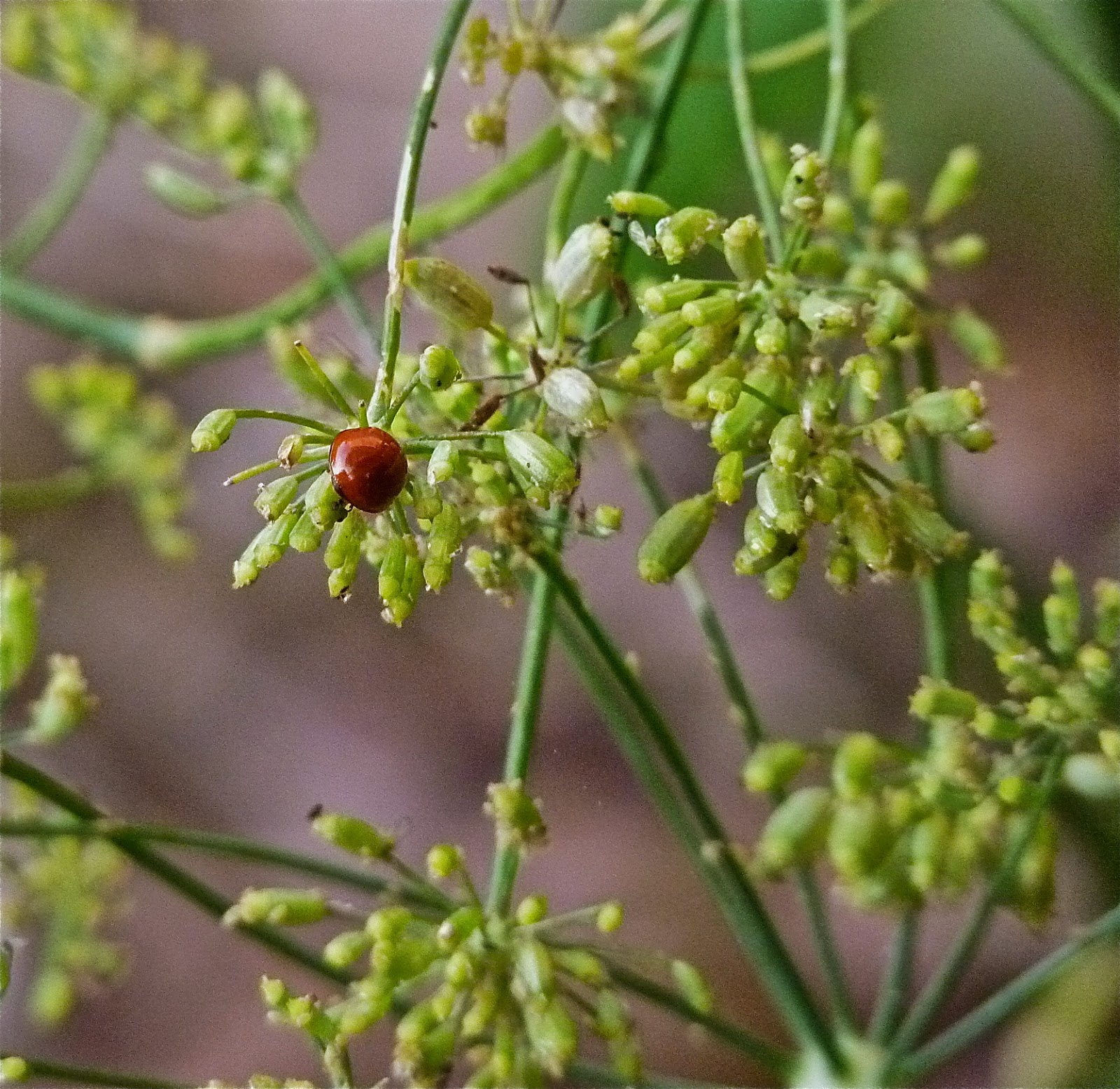


So maybe I don't have the targeted, coveted swallowtail caterpillars happily munching away on my aphid beleaguered fennel this year. It is what it is. And I have seen swallowtail butterflies daily especially around our citrus plants.

This post is my contribution for August to Wildlife Wednesday, a new meme occurring the first wednesday of each month, fresh to the blogosphere and hosted by Tina at My Gardener Says. Thanks to Tina for hosting, and to you for reading. Glad you dropped by. Hope you'll feel free to post about your own wildlife, and join in on the fun.
Per Tina: "Post your wildlife wisdom, then leave a comment on this (My Gardener Says) blog along with a link to your blog so all can share in new information, experiences and maybe even some chuckles about wildness in our gardens!"

