
But that term cannot possibly be applied (in my garden beds at least) to the Bristly Mallow (Modiola caroliniana). Not only do I love the way it looks in bloom, far from choking out more desirable plants, it grows and blooms when and where little else seems happy, in early Spring around the base of our back yard bird feeder's post.
 |
| Round fruit forming, referred to as "wheel shaped schizocarps". A schizocarp is a dry fruit that splits into two or more one-seeded portions at maturity. |
Low growing, with the most amazing tiny (half inch wide or less) coral to orange flowers, it takes a good lean-down to observe the starburst of red anthers dancing above the familiar mallow form of its blossoms.

Reportedly people traditionally prepared medicinal infusions of the leaves (the seeds are toxic) along with using the leaves in fresh salads. But I wouldn't dream of harvesting these plants at the moment. I'm too busy being captivated by the delicate coral colored blossoms highlighted against the contrasting chartreuse colored fruit.

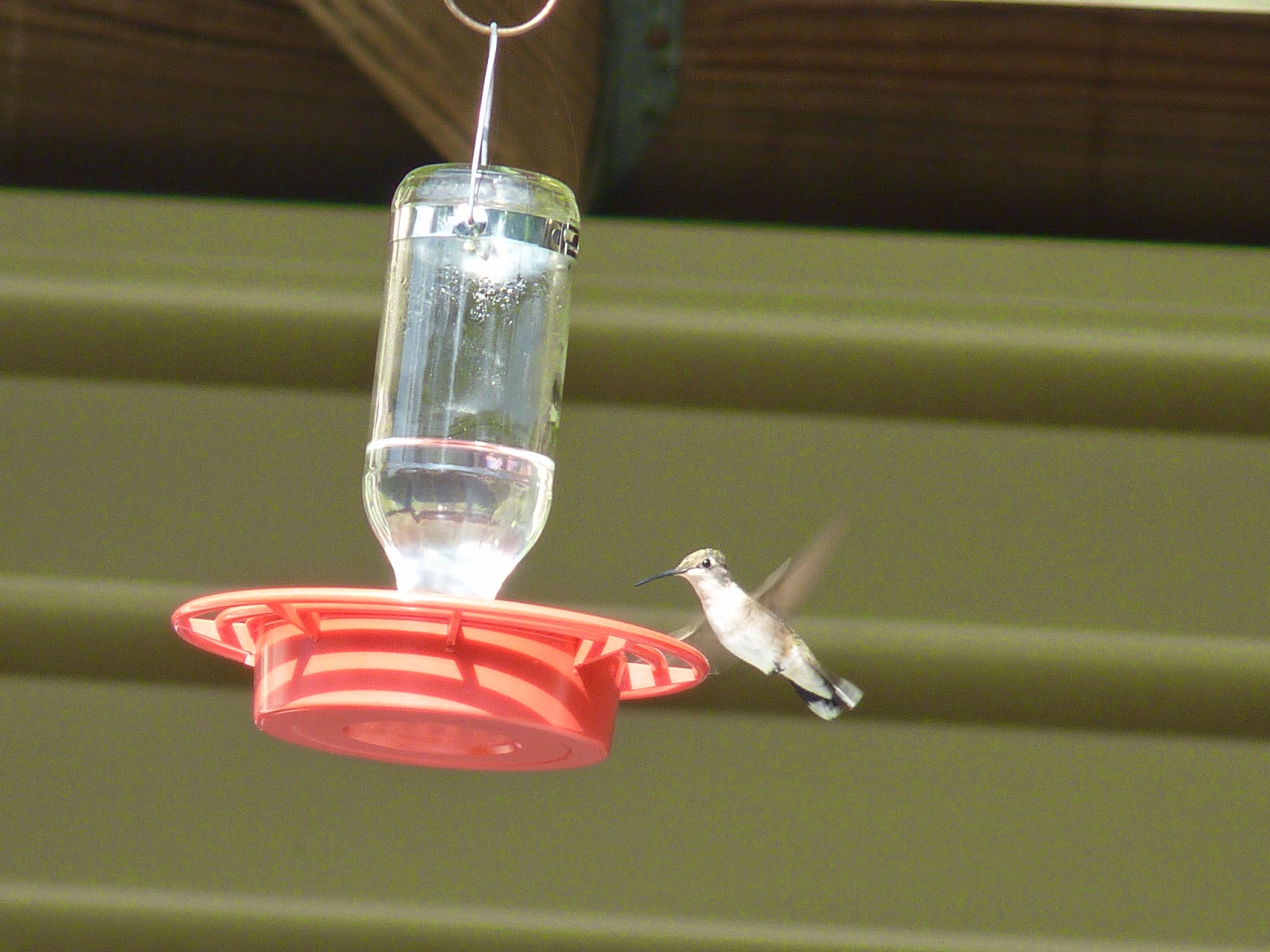
In other news - I spotted the first hummingbird of the season at our back yard feeder this afternoon. I put both our feeders up about 10 or so days ago when I noted other local bloggers were reporting their first sightings. This photo is from another year but is a close match to the bird I saw today which I believe is an immature black chinned hummingbird. Hummingbirds put on quite a show each year and I'm always happy to welcome these visitors back.
Given my oak allergies (readers will be freely forgiven for wondering how many more mentions this topic will get) I admit at this time of year it might seem only sensible to limit my garden observations to whatever I can see from our windows. But with tiny birds and even tinier flowers out to play, any definition of sensible will have to yield to the delights on offer.

